AC Generator Electromagnetic Energy Conversion

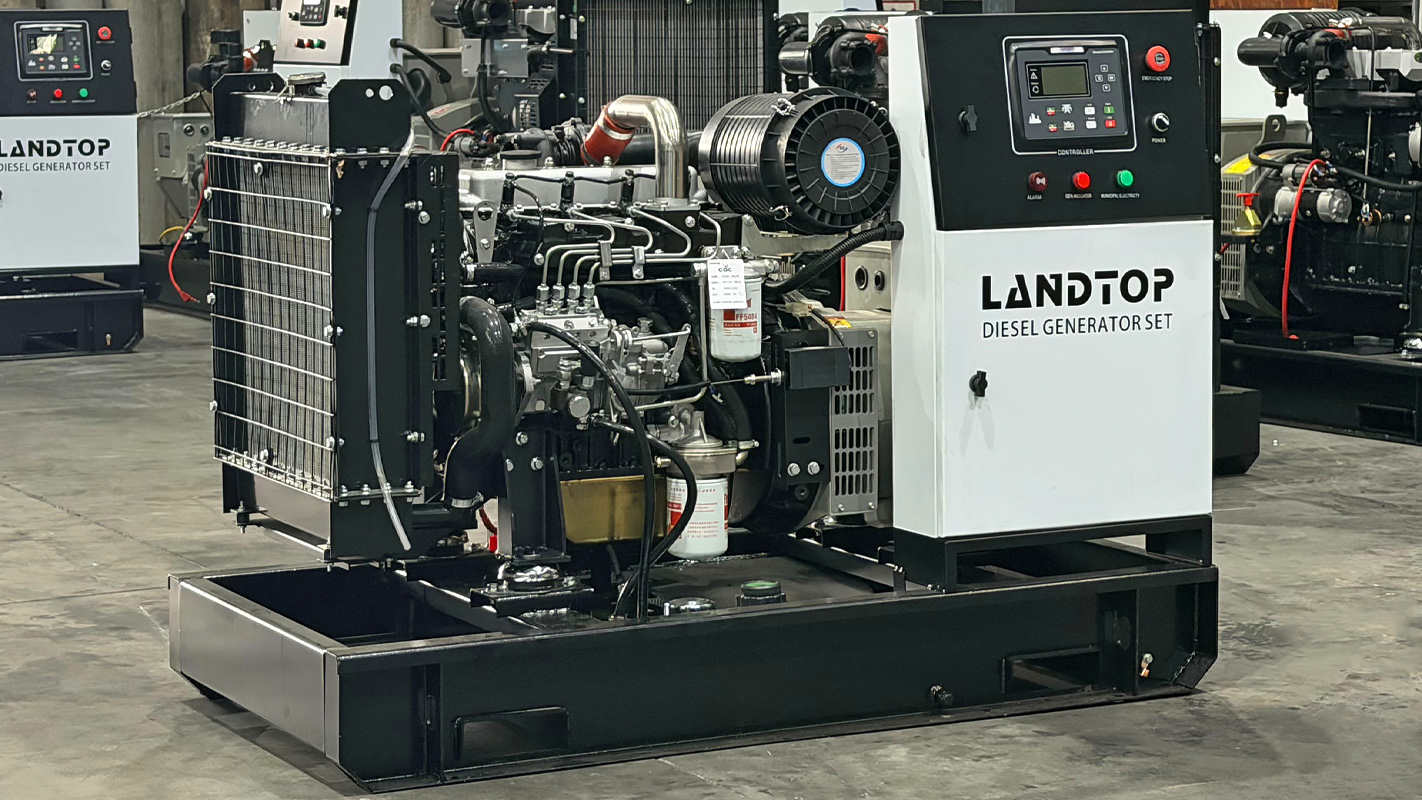
(45kW open-frame diesel generator set powered by Ricardo engine)
Electromagnetic energy conversion forms the cornerstone of alternating current (AC) generator functionality, where mechanical rotation is seamlessly transformed into electrical power through fundamental physical laws. This process relies on Faraday's Law of Induction, which states that a changing magnetic field induces an electromotive force (EMF) in a conductor. In AC generators, a rotor's rotational motion creates a dynamic magnetic field that intersects stationary stator windings, generating sinusoidal alternating current. The efficiency of this conversion hinges on precise magnetic flux linkage and minimal energy dissipation, principles validated by cutting-edge astrophysical research on electromagnetic energy extraction from cosmic phenomena.
Three core mechanisms govern this conversion:
- Magnetic Field Dynamics: Rotor excitation (typically via DC current) produces a rotating magnetic field. As this field cuts across stator conductors, it induces voltage through flux variation. Synchronization between rotor speed and output frequency ensures stable grid-compatible power.
- Energy Loss Mitigation: Conversion efficiency is compromised by eddy currents, hysteresis losses, and resistive heating. Advanced materials like laminated cores and high-conductivity windings reduce these losses, mirroring innovations in thermoelectric energy conversion studied at quantum scales.
- Electromagnetic Optimization: Modern designs leverage computational modeling to refine magnetic circuit geometry, enhancing flux density while minimizing leakage. This approach draws parallels with simulations of solar flare energy conversion, where 3D magnetic reconnection maximizes energy transfer.
The universality of electromagnetic principles extends beyond terrestrial applications. Research on pulsar remnants and black hole magnetospheres confirms that similar energy conversion laws operate in extreme cosmic environments, emphasizing the robustness of Faraday's foundational theory. In generators, these principles enable scalability—from portable units to grid-scale systems—while maintaining >95% efficiency in optimized designs.
Future advancements will integrate smart materials and AI-driven control systems to dynamically adjust magnetic fields under load variations, pushing conversion efficiency toward theoretical limits. As gravitational field studies reveal new dimensions of electromagnetic interactions, generator technology stands to benefit from cross-disciplinary insights, ultimately driving sustainable global electrification.
(Note: This content is generated by AI technology. The accuracy and reliability of the information should be independently verified. FUZHOU LANDTOP CO., LTD. assumes no liability for consequences arising from the use of this AI-generated material.)
Generator Dual Loop Cooling Tech
Silent Diesel Generator Noise Reduction Design
Related Article