Air vs Water Cooling Diesel Generators

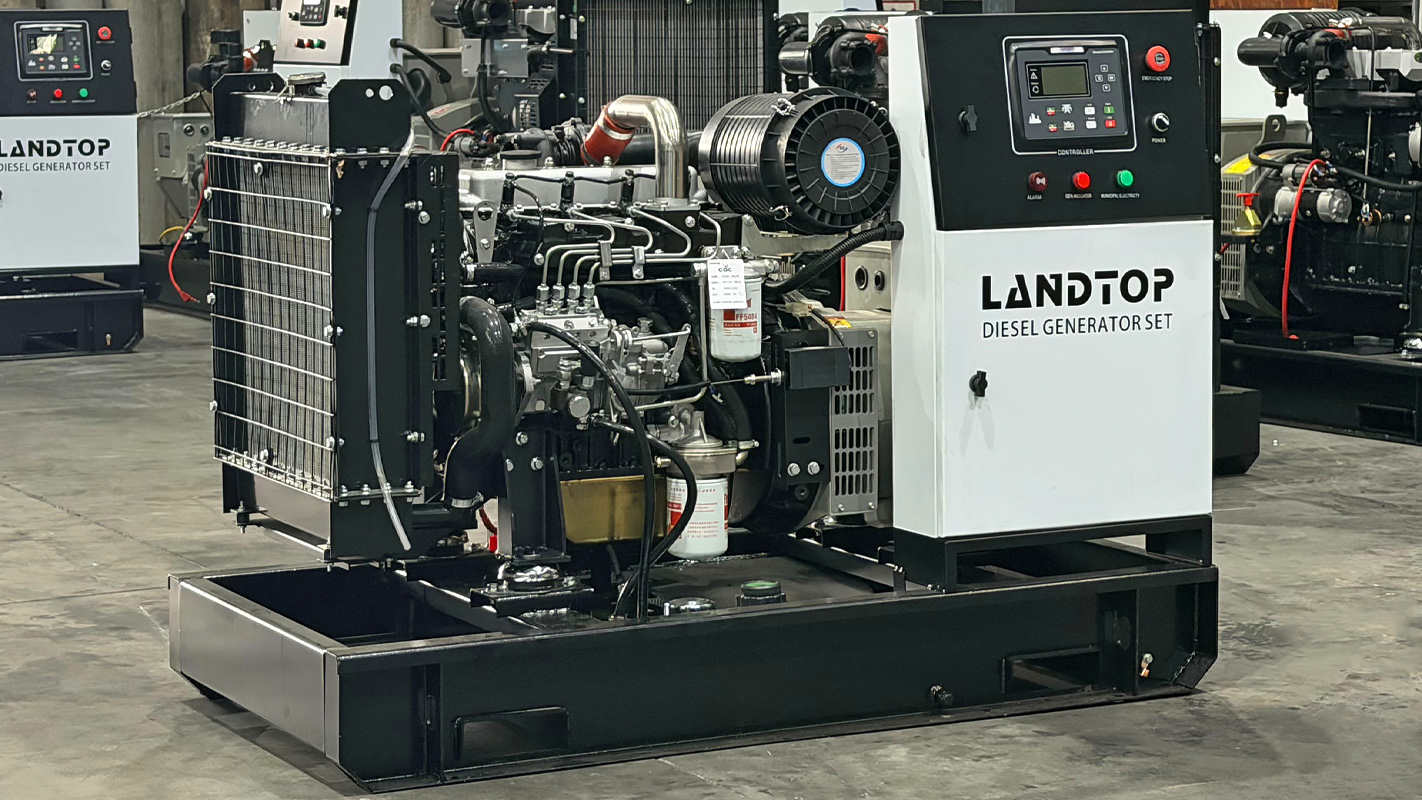
(Photo of the internal structure of the 10KW air-cooled diesel generator set)
Diesel generators are vital power sources across industries, and their cooling systems—air-cooled (air-cooled generators) and water-cooled (water-cooled systems)—fundamentally impact efficiency, durability, and operational viability. Air-cooled generators rely on ambient airflow directed by fans over engine surfaces and integrated radiator fins. This design leverages convection for heat dissipation, eliminating complex fluid circuits. Conversely, water-cooled systems circulate coolant (typically water-glycol mixtures) through engine jackets and external radiators, utilizing liquid’s superior thermal conductivity for heat extraction.
Critical Differences and Trade-offs
The divergence begins with thermal management capability. Water cooling maintains consistent engine temperatures even under extreme loads or high ambient heat (>40°C), preventing overheating-induced power derating. Air cooling struggles in such conditions, as its efficiency hinges on ambient air temperature and airflow velocity—making sustained heavy-load operations risky in confined spaces. Structural complexity further distinguishes them: Air-cooled setups require only fans, ducts, and fins, minimizing failure points. Water-cooled units demand pumps, hoses, radiators, and coolant reservoirs, increasing installation costs and maintenance dependencies.
Operational and Environmental Suitability
Air-cooled generators excel where simplicity and mobility are paramount. Their compactness benefits mobile units, temporary sites, or arid/remote regions with water scarcity. However, noise levels (>85 dB) and sensitivity to dusty/humid air limit indoor use. Water-cooled variants dominate high-power applications (>500 kVA) and continuous-duty scenarios like data centers or manufacturing plants. Their quieter operation (<75 dB) suits urban settings, though freezing climates mandate antifreeze solutions.
Lifecycle Considerations
Maintenance diverges sharply: Air-cooled systems need only periodic air-filter cleaning and fan inspections, reducing downtime. Water-cooled units require coolant replacements, leak checks, and pump servicing—adding 15–20% to long-term costs but enabling 30% longer engine lifespans by reducing thermal stress. Energy efficiency subtly favors water cooling; stabilized temperatures optimize combustion, saving 3–5% fuel versus air-cooled peers under identical loads.
Strategic Selection Guidelines
Choose air cooling for:
- Low-power (<300 kVA), intermittent-use scenarios
- Budget-constrained projects with space/weight limitations
- Rapid-deployment needs in ventilated areas
Opt for water cooling when: - High/reliable power output is non-negotiable
- Noise reduction and emissions compliance are critical
- Infrastructure supports coolant maintenance
Ultimately, the cooling decision balances immediate costs against total ownership expenses, environmental constraints, and performance non-negotiables—a strategic investment defining operational resilience.
(This content is generated by AI technology. The accuracy and reliability of the information should be independently verified. FUZHOU LANDTOP CO., LTD. assumes no liability for consequences arising from the use of this AI-generated material.)
AVR Powering Self Excited Brushless Generators
Self Excited Synchronous Brush Alternator Pulley Installation Guide
Related Article