AVR Powering Self Excited Brushless Generators
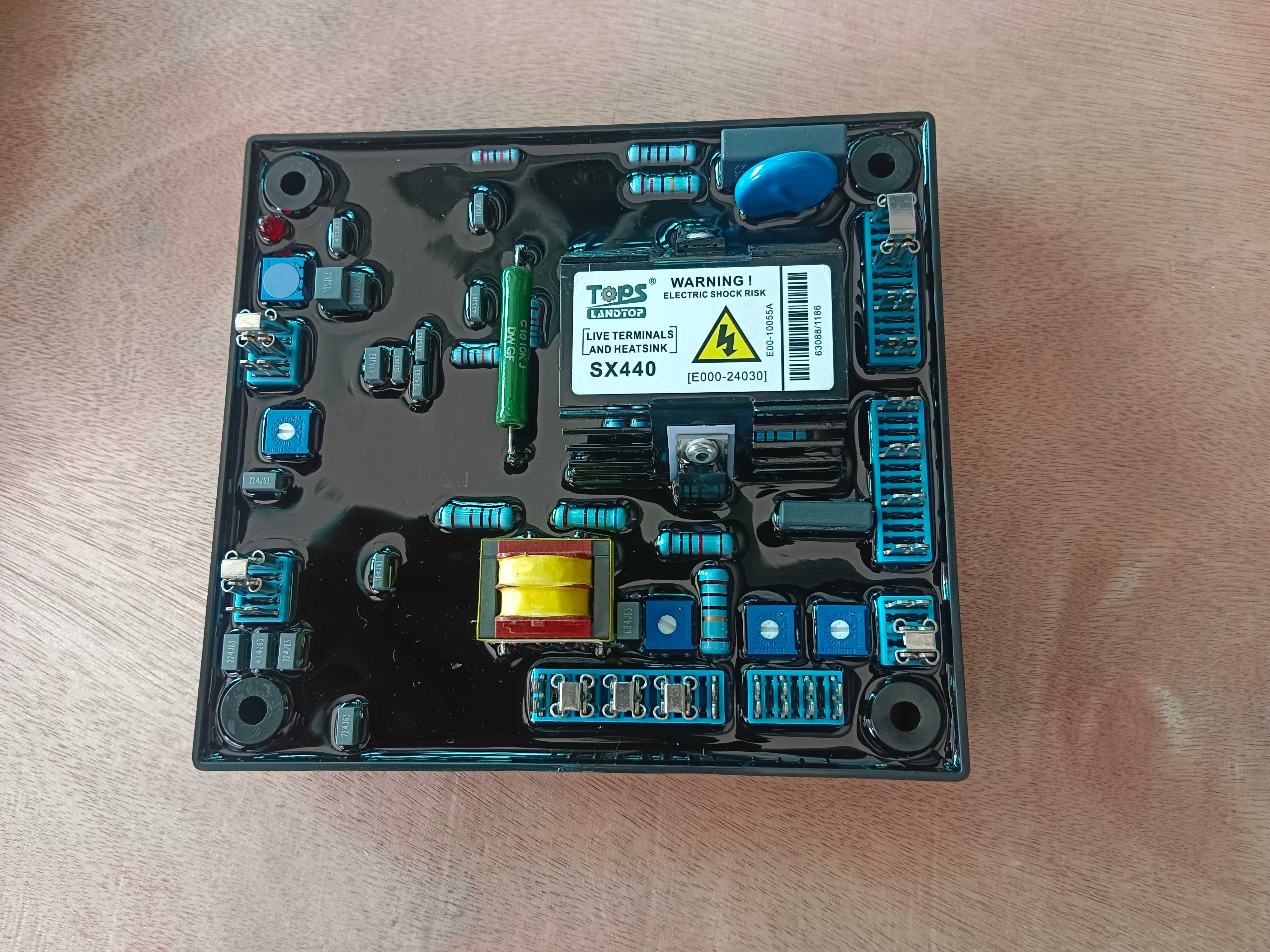
(LANDTOP AVR SX460)
In modern power generation systems, the Automatic Voltage Regulator (AVR) serves as the intelligent core of self-excited brushless synchronous generators, enabling precise voltage control without mechanical commutators. Unlike traditional brushed designs, these generators leverage electromagnetic induction and electronic regulation to deliver unmatched resilience in volatile operational environments. The AVR continuously monitors output voltage and dynamically adjusts excitation current to maintain consistent terminal voltage, counteracting fluctuations caused by load shifts or prime mover speed variations.
Fundamental Role in Self-Excitation
Self-excitation initiates when residual magnetism in the rotor induces a small voltage in the stator windings. This initial voltage is amplified through a closed-loop system where the AVR rectifies and feeds back controlled current to the exciter field. By modulating Pulse-Width Modulation (PWM) signals to rotating thyristor bridges, the AVR sustains this feedback loop, ensuring rapid voltage buildup and eliminating dependency on external DC sources. This autonomous excitation mechanism is pivotal for generators deployed in remote or mobile applications where external power is unavailable.
Core Technological Mechanisms
The AVR's architecture integrates three critical functions: sensing, computation, and correction. Voltage sensors detect deviations from preset values (typically ±0.5% regulation accuracy), while microcontroller-based algorithms calculate optimal field current adjustments. These corrections execute via semiconductor switches like IGBTs or SCRs, which regulate excitation power to the main rotor through a rotating diode/thyristor assembly. Crucially, this solid-state design eliminates brush arcing and carbon dust accumulation – a key advantage in dust-prone industrial or maritime settings.
Dynamic Response and Stability Enhancement
Under transient loads, the AVR employs rate-of-change compensation to anticipate voltage dips/surges. By instantly boosting excitation during sudden load connections (e.g., motor startups), it prevents catastrophic voltage collapses while minimizing overshoot during load shedding. Advanced models incorporate droop control for parallel generator synchronization, actively managing reactive power distribution between units without manual intervention. This responsiveness is essential for maintaining grid-compatible power quality in renewable energy hybrids or microgrids.
Protection and Adaptive Features
Beyond regulation, modern AVRs embed multi-layered protective functions. They enforce thermal rollback to derate excitation during overheating, initiate instantaneous field suppression for internal fault isolation, and include under-frequency lockouts to prevent core saturation during engine stalling. Furthermore, adaptive algorithms compensate for winding temperature changes and aging component characteristics, sustaining precision throughout the generator's lifecycle.
System-Wide Efficiency Impacts
Precise voltage regulation directly reduces wasteful circulating currents and minimizes mechanical stress on coupled equipment. By stabilizing output within ±1% of nominal voltage, AVRs cut transformer humming losses and mitigate insulation degradation in connected machinery. The elimination of brushes also slashes maintenance downtime by up to 40%, extending generator service intervals significantly compared to brushed alternatives.
In essence, the AVR transforms brushless generators into self-optimizing power sources. Its fusion of solid-state reliability and adaptive control algorithms makes it indispensable for critical infrastructure – from data centers requiring flawless uptime to offshore vessels navigating corrosive environments. As industries prioritize resilience and efficiency, AVR technology remains the silent guardian of electrical stability.
(Note: This content is generated by AI technology. The accuracy and reliability of the information should be independently verified. FUZHOU LANDTOP CO., LTD. assumes no liability for consequences arising from the use of this AI-generated material.)
Rectifier Function in Brushless Synchronous Generators
Air vs Water Cooling Diesel Generators
Related Article