Extreme Condition Electromechanical Failure Mechanisms
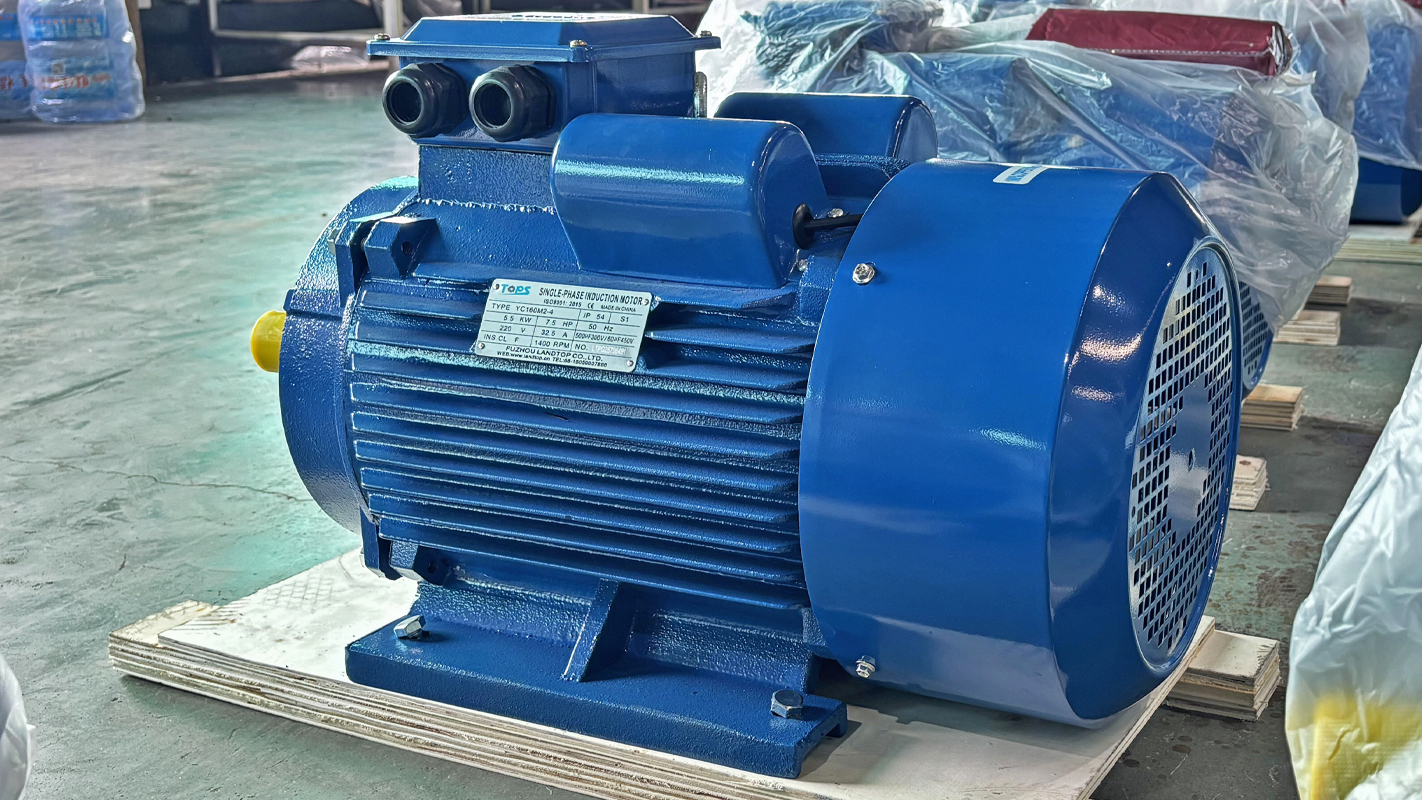
(LANDTOP brand single-phase asynchronous induction motor YC160M2-4-5.5KW/7.5HP)
Electromechanical systems operating in extreme environments—such as high thermal stress, corrosive atmospheres, or intense dynamic loads—face accelerated degradation and complex failure modes. These conditions induce synergistic interactions between electrical, thermal, and mechanical stressors, leading to three primary failure pathways:
- Thermal-Electrical Decoupling: Elevated temperatures disrupt insulation integrity and semiconductor performance, causing leakage currents and dielectric breakdown. This is exacerbated in high-power-density systems where thermal runaway becomes self-perpetuating.
- Dynamic Load Fatigue: Cyclical mechanical stresses from vibration or abrupt torque shifts initiate micro-cracks in bearings and windings, propagating into catastrophic fractures. The absence of real-time strain compensation accelerates this process.
- Environmental Degradation: Particulate ingress (e.g., dust/metallic debris) and humidity induce electrochemical corrosion, short-circuiting, and insulation delamination.
Advanced protection strategies must adopt a multiphysics approach:
- Predictive Material Engineering: Utilizing wide-bandgap semiconductors and nano-composite insulation materials to enhance thermal conductivity (>5 W/mK) while suppressing partial discharges. Computational models map stress distribution to preempt weak zones.
- Active Resilience Control: Embedded sensors coupled with AI-driven digital twins monitor entropy changes in real-time. For instance, algorithms correlate harmonic distortion patterns with impending bearing faults, triggering pre-failure countermeasures like adaptive damping or load redistribution.
- Hermetic System Design: Multi-barrier encapsulation (IP68+/NEMA 6 standards) with self-regulating humidity scavengers and electromagnetic shielding. This isolates critical components from external contaminants while managing internal thermal fluxes through phase-change materials.
The convergence of these methodologies extends equipment lifespan by 300–400% in aerospace, deep-sea robotics, and energy infrastructure. Future innovations will focus on autonomous self-healing systems, where topology-optimized components dynamically reconfigure under detected stressors.
(Note: This content is generated by AI technology. The accuracy and reliability of the information should be independently verified. FUZHOU LANDTOP CO., LTD. assumes no liability for consequences arising from the use of this AI-generated material.)
Global Supply Chain Volatility Electromechanical Capacity Impact
Generators Green Shift Under Dual Carbon Goals
Related Article