Generator Dual Loop Cooling Tech

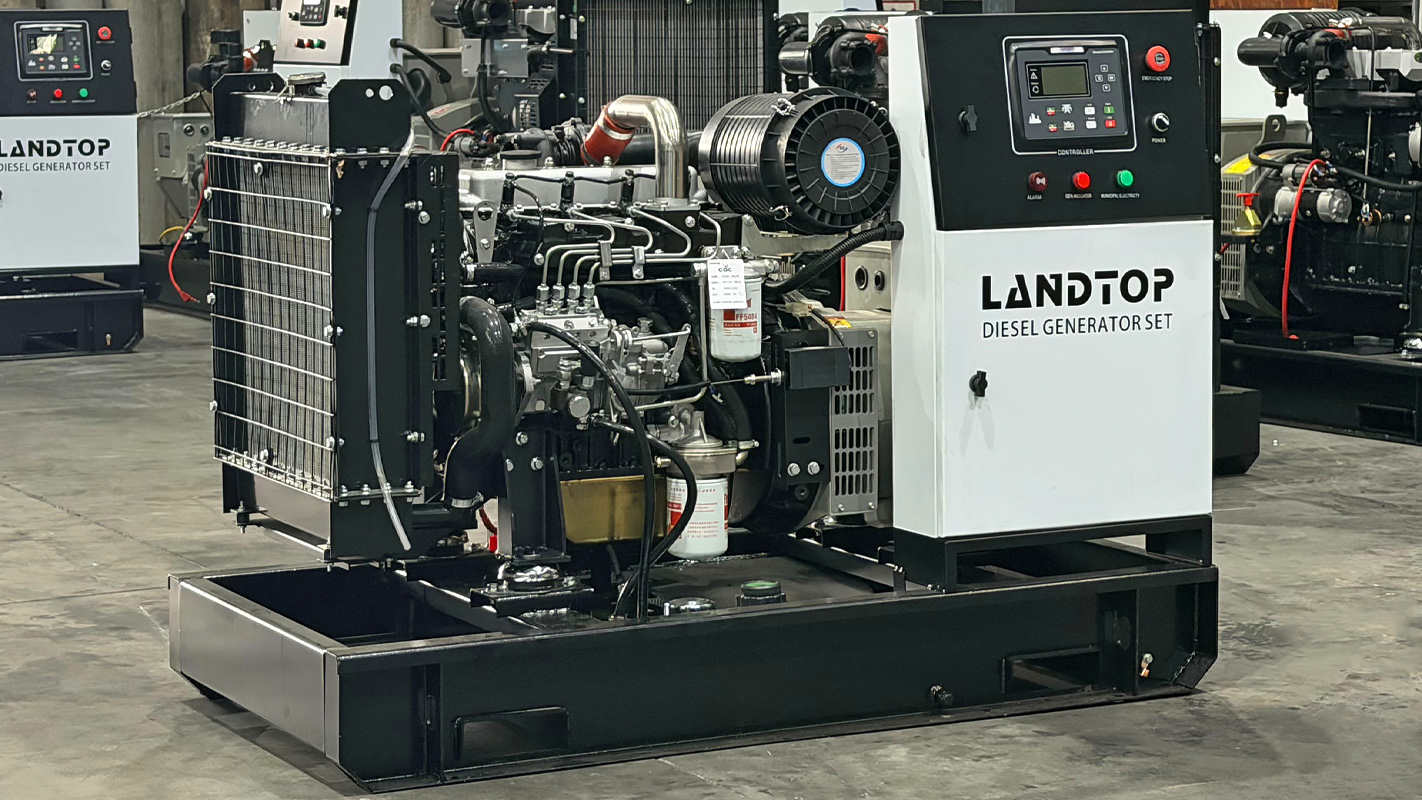
Modern power generation faces escalating thermal management challenges as industrial and emergency applications demand higher operational reliability. Dual-loop cooling technology represents a paradigm shift in generator thermal control, decoupling internal heat absorption from external dissipation through two isolated circuits. This architecture leverages a primary closed loop where specialized coolant (e.g., glycol-water mixtures) circulates through engine jackets and stator windings, absorbing critical heat loads. The secondary loop then efficiently expels this accumulated heat via external radiators, air-cooled heat exchangers, or liquid-to-liquid systems—enabling precise temperature modulation regardless of ambient conditions.
Engineering Principles
The core innovation lies in segregating cooling functions to overcome traditional limitations. In conventional single-loop systems, contaminants like dust or saltwater accelerate corrosion while variable climates cause thermal stress. Dual-loop designs eliminate these compromises: the primary loop maintains chemically optimized coolant purity for maximum heat transfer efficiency and component protection, while the secondary loop handles harsh environmental exposure. This separation enables tailored fluid dynamics—high-velocity flow in critical hotspots ensures uniform temperature distribution, preventing localized overheating that degrades insulation or warps bearings. Computational fluid dynamics (CFD) optimizes flow paths to minimize hydraulic losses, reducing parasitic pump power by 15-20% compared to legacy designs.
Performance Advantages
Thermal stability is the foremost benefit. By sustaining optimal operating temperatures (typically 80-95°C), dual-loop systems extend generator lifespan by halving thermal fatigue on seals and gaskets. Efficiency gains emerge from two dimensions: reduced fuel consumption (cooling pumps draw 30% less power) and enhanced electrical output consistency. When generators overheat, derating—power output reduction—occurs to prevent damage. Dual-loop technology virtually eliminates derating, maintaining >98% rated capacity during sustained overloads or +45°C ambient temperatures. Additionally, the secondary loop's scalability supports waste heat recovery integration; captured thermal energy can preheat fuels or drive absorption chillers, boosting overall energy utilization.
Operational and Environmental Impact
Maintenance burdens plummet as closed primary loops prevent scale/corrosion buildup, extending coolant replacement intervals to 10,000+ service hours. Noise pollution decreases significantly—secondary radiators incorporate acoustic-damping materials and variable-speed fans, cutting sound emissions by 8-12 dB(A) versus forced-air cooling. Environmentally, the technology slashes water consumption in applications traditionally reliant on open-loop cooling (e.g., coastal installations), while precise temperature control curbs nitrogen oxide (NOx) formation by ensuring stoichiometrically efficient combustion.
Strategic Implementation
Adopting dual-loop cooling transcends technical upgrades—it future-proofs power systems. Modular secondary loops facilitate retrofitting into existing generators, while IoT-enabled sensors monitor thermal differentials and predict maintenance needs. As renewable integration grows, the technology's rapid thermal response stabilizes grids during solar/wind intermittency. Industries from data centers to offshore platforms now prioritize this approach, recognizing that superior thermal management underpins both operational resilience and sustainability targets.
(Note: This content is generated by AI technology. The accuracy and reliability of the information should be independently verified. FUZHOU LANDTOP CO., LTD. assumes no liability for consequences arising from the use of this AI-generated material.)
Adaptive Industrial Load Handling with Induction Motors
AC Generator Electromagnetic Energy Conversion
Related Article