Multi Generator Parallel Operation Dynamics
Technical Foundations of Parallel Operation
-
Synchronization Precision
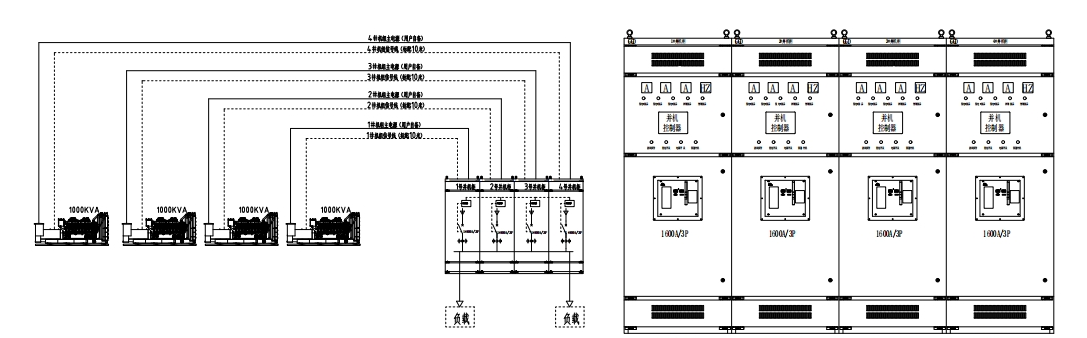
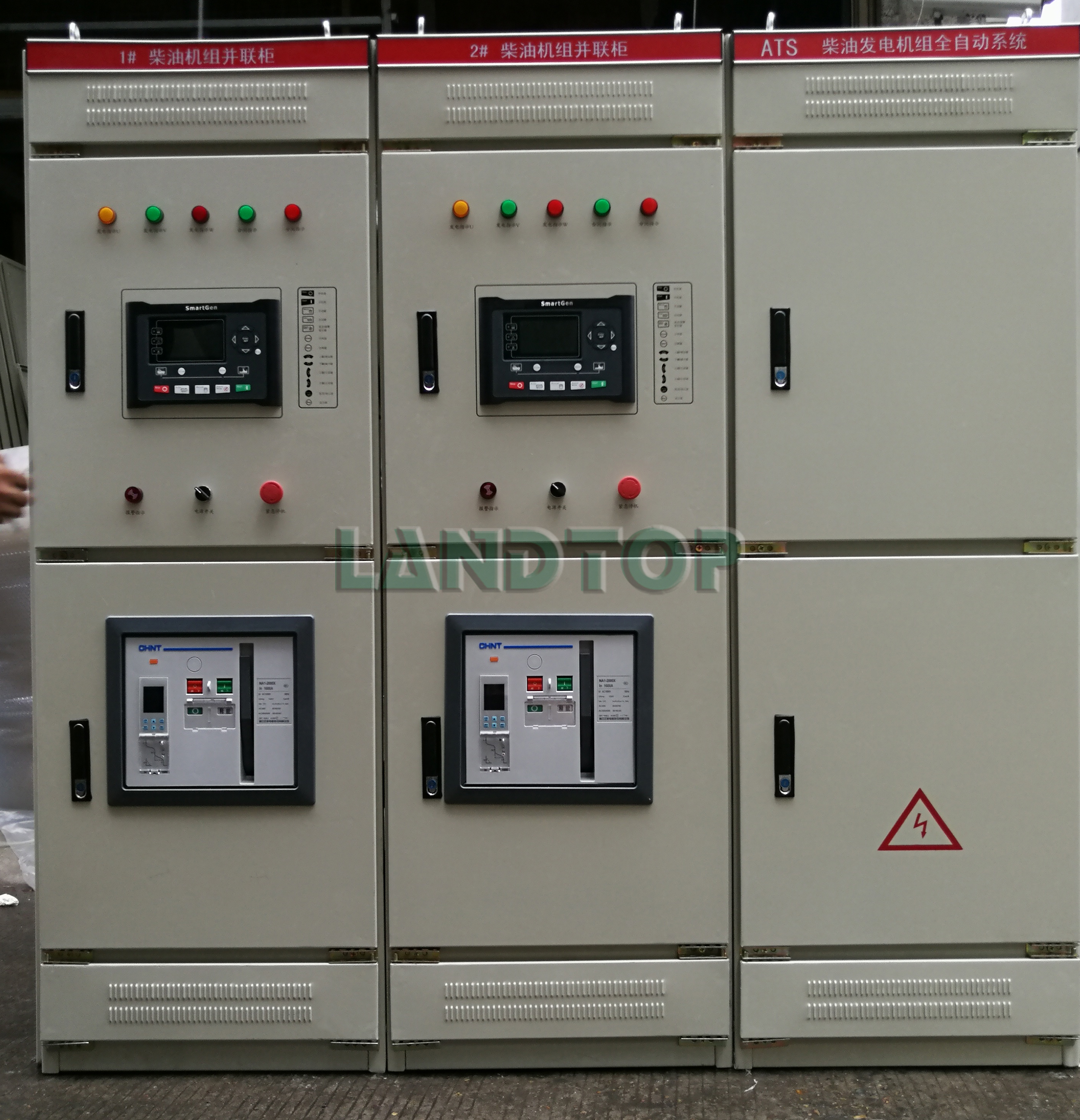
Parallel systems employ microprocessor-based controllers to align voltage (±0.25%), frequency (≤0.1Hz deviation), and phase sequence across generators before interconnection. Real-time harmonic analysis ensures waveform coherence, maintaining total harmonic distortion (THD) below 2% during synchronization. -
Adaptive Load Sharing
Proportional-integral-derivative (PID) algorithms dynamically distribute loads across units with <1% imbalance tolerance. This cyber-physical integration enables:
- Linear Load Response: Seamless scaling from 20% to 100% total system capacity
- Transient Compensation: Voltage recovery within 1.5 cycles during 50% step load changes
- Efficiency Optimization: Automatic unit activation/deactivation based on demand thresholds
- Fault Current Management
Coordinated protection relays calculate prospective short-circuit currents (PSCC) across parallel buses, enabling selective tripping that isolates faults while sustaining non-affected generator operations.
Strategic Operational Advantages
- Mission-Critical Reliability
- N+1 Redundancy: Continuous operation during single generator maintenance/failure
- Black Start Capability: Self-powered synchronization without external grid references
- Microgrid Independence: Islanded operation stability meeting IEEE 1547-2018 standards
- Economic Efficiency
- Fuel Optimization: 18-22% consumption reduction through load-dependent unit engagement
- Lifecycle Extension: Even wear distribution across generators increases overhaul intervals by 40%
- Demand Charge Mitigation: Peak shaving capabilities reducing utility tariff penalties
- Environmental Compliance
- Emissions Control: Load-proportional exhaust treatment maintains NOx levels <200mg/Nm³
- Acoustic Management: Phase-canceling generator positioning lowers noise pollution by 12dBA
- Thermal Efficiency: Waste heat recovery integration boosts combined efficiency to 85%
- Scalable Infrastructure
- Modular Expansion: Plug-and-play integration of additional generators without system reconfiguration
- Hybrid Readiness: Seamless interface with solar/wind/storage systems through common DC bus architecture
- Geographic Distribution: Decentralized generator placement minimizing transmission losses
Intelligent Control Ecosystem
-
Predictive Analytics Integration
Machine learning algorithms process vibration spectra, exhaust gas temperatures, and lubricant degradation data to forecast maintenance needs 500-800 operational hours in advance. -
Cybersecurity Protocols
IEC 62443-compliant controllers implement encrypted canary traps and behavior-based intrusion detection for grid-connected systems. -
Edge Computing Capabilities
On-site computational nodes execute real-time load forecasting and weather-adjusted performance modeling without cloud dependencies.
Future-Ready Power Architecture
-
Hydrogen Fuel Adaptation
Parallel systems natively support hydrogen-diesel dual-fuel generators, enabling phased decarbonization without infrastructure overhaul. -
Blockchain Energy Trading
Smart contract-enabled excess capacity monetization through peer-to-peer microgrid transactions. -
5G-Enabled Remote Orchestration
Ultra-low latency control loops permit multi-site generator fleet synchronization from centralized command centers.
Conclusion
Parallel diesel generator systems transcend conventional backup roles, emerging as intelligent energy hubs that dynamically balance operational resilience with sustainability imperatives. Their inherent scalability and digital integration capabilities position them as cornerstone technologies in the transition toward adaptive, self-healing power infrastructures.
Explore technical specifications and system design guidelines at www.landtop.cn
Stamford Brushless Generator Superiority Value Proposition
Stator Rotor Materials Impact Brushless Generators
Related Article