Understanding Induction Motor Energy Consumption
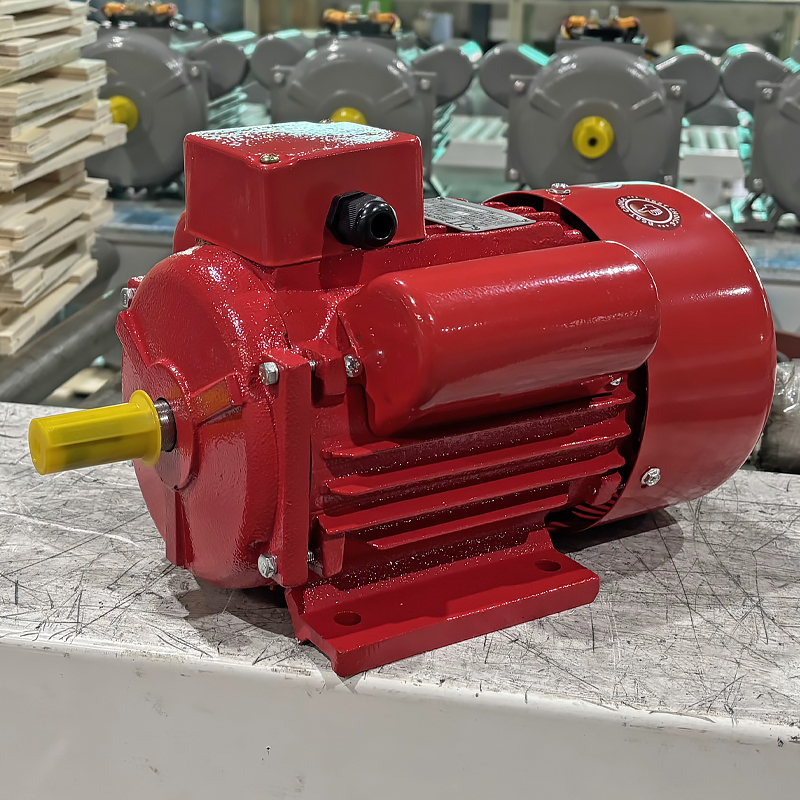
(YC80B-4-0.37KW/0.5HP)
Accurately calculating the daily energy consumption of asynchronous AC induction motors is essential for optimizing industrial efficiency and reducing operational costs. Unlike static devices, motor energy use fluctuates dynamically based on multiple interconnected variables. This article breaks down the core calculation methodology and examines critical factors influencing power draw—empowering engineers to make data-driven decisions.
Energy Calculation Framework
Daily energy consumption (E) is quantified as:
E (kWh) = P_in × t
Where P_in is input power (kW) and t is daily runtime (hours). Crucially, P_in derives from mechanical output power (P_out) divided by motor efficiency (η):
P_in = P_out / η
P_out depends on torque (T) and rotational speed (N):
P_out = 2π × N × T / 60,000 (for N in RPM, T in Nm)
Efficiency (η) acts as the pivotal conversion gatekeeper between electrical input and mechanical output. As highlighted in international standards, premium efficiency motors (e.g., IE4 class) achieve η≥95% at full load, while older models may dip below 80%, drastically altering P_in. Losses within this system manifest as:
- Copper losses (I²R): Heat dissipation in stator/rotor windings, proportional to current squared.
- Iron losses: Hysteresis and eddy currents in the core, exacerbated by voltage fluctuations.
- Friction/windage losses: Mechanical resistance from bearings and cooling fans.
- Stray load losses: Leakage fluxes and harmonic distortions.
Key Factors Influencing Energy Consumption
-
Design Parameters
Motor efficiency ratings (e.g., IE3 vs. IE4) directly govern baseline energy conversion performance. High-grade materials—such as low-loss silicon steel laminations and optimized rotor bar geometries—reduce iron and stray losses by up to 40%. Larger frame sizes also improve heat dissipation, indirectly sustaining efficiency during overloads. -
Operating Conditions
- Load Factor: Motors operating below 50% load experience efficiency drops exponentially due to disproportionate fixed losses. Oversizing motors remains a prevalent energy-wasting practice.
- Voltage Imbalance: Asymmetry exceeding 1% in three-phase supplies induces reverse-rotating fields, escalating copper losses by 5–7×.
- Speed Control: Variable Frequency Drives (VFDs) adjust motor speed to match demand, but introduce harmonic losses if unfiltered. The trade-off between speed reduction savings and drive losses requires precise calibration.
-
Environmental Variables
Ambient temperature significantly impacts winding resistance; every 10°C rise increases copper losses by 4%. Dust accumulation on vents or windings similarly elevates operating temperatures, accelerating insulation degradation. Humidity-triggered corrosion in terminals raises contact resistance, further increasing parasitic losses.
Conclusion
Mastering asynchronous motor energy calculations transcends formulaic approaches—it demands holistic analysis of design quality, operational discipline, and environmental stewardship. By prioritizing high-efficiency designs, maintaining voltage stability, and right-sizing motor loads, industries can achieve energy savings exceeding 30%. Continuous monitoring via IoT-enabled sensors further refines these strategies, transforming raw data into actionable efficiency gains.
Self Excited Synchronous Brush Alternator Pulley Installation Guide
Tianjin Leikang Diesel Engines Industrial Power
Related Article